
Drew Pety

Drew Pety
Forum Replies Created
-
 Drew PetyMember, August 24, 2026 at 10:37 pmin reply to: Reflections
Session 2 – Unstable Objects: Photography, Social Change, and Dissent
Choose a historical photograph. Find three versions of this photograph online.
Note any differences you see between these versions.
How has cropping impacted each version of the image?
How has cropping affected or changed the politics of this image?
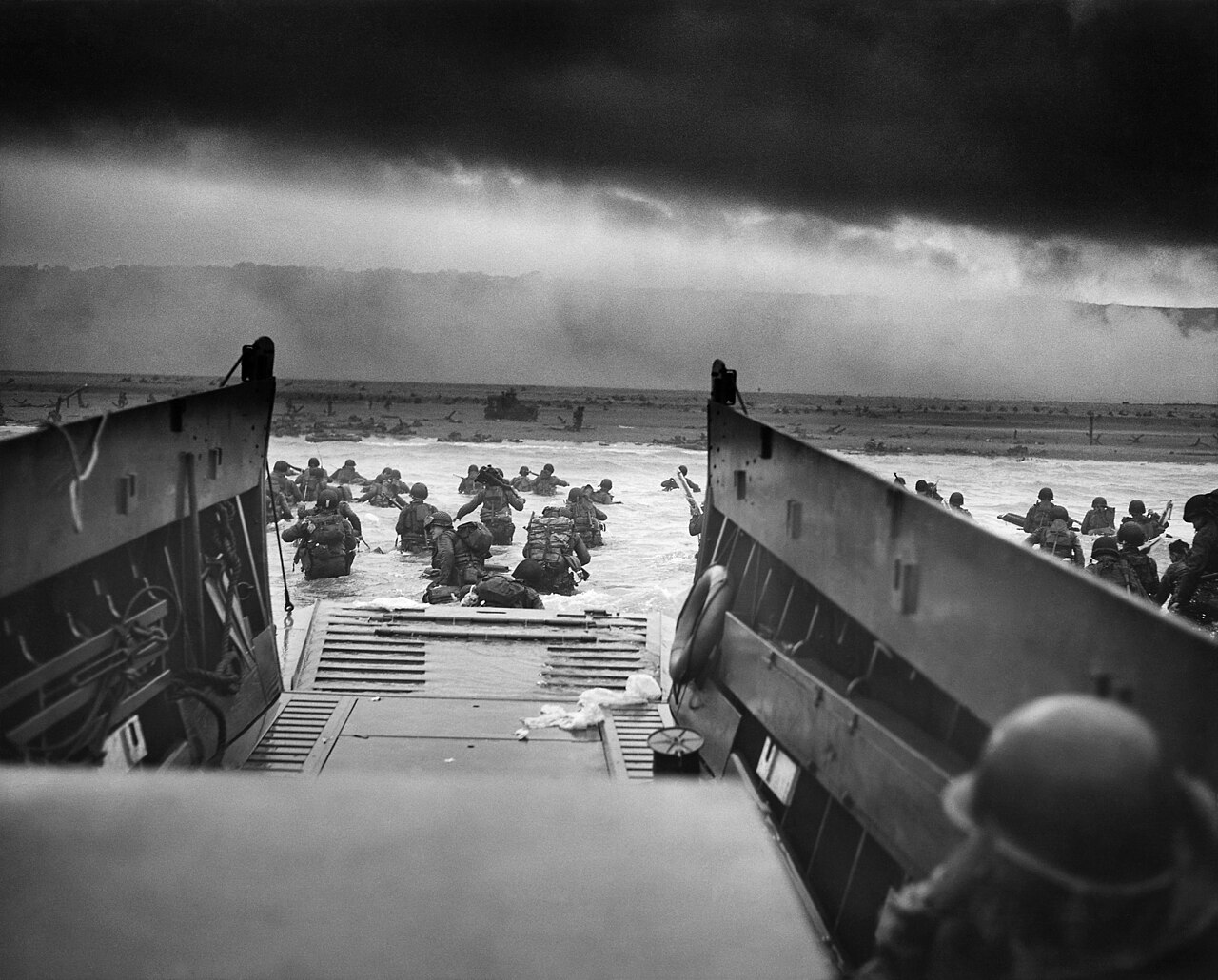
I’ve selected the photograph titled “Into the Jaws of Death” by Robert F. Sargent, taken June 6, 1944. The image depicts American soldiers disembarking their landing craft, wading through the water to storm Omaha Beach during the Normandy landings of World War II. The first image is the original, the second is cropped to focus primarily on the soldiers toward the center of the frame, and the third (printed as a comforter?…) is cropped to make the image vertical and highlight only the scene framed by either side of the military landing craft.
Compared to the original, the second image is zoomed-in and appears to draw attention to the only soldier whose face we can see, as he’s turned almost 90 degrees, showing his left profile. Here, we can only see a small portion of the beach and none of the background beyond it, nor can we see the sky, which adds an ominous element to an already dire scene.
The third image not only seems to lessen the seriousness of the events taking place, considering it’s been made into a comforter for a bed, but—along with the second image—does not depict the scale of the scene that’s unfolding. These two images could be showing just one boat worth of soldiers, rather than what’s shown in the original, where we get the sense that there are numerous landing crafts in play, with—what is likely—many more soldiers.
By cropping the original, the second and third images seem to lose some of the intensity. Granted, it’s still a war scene, but with the second image, for example, we cannot see the background and sky, which happen to add—not only to the composition—but the overall mood of the image. As mentioned, the dark sky is rather ominous, and the sunlight that does break through the clouds and onto the beach, makes the photo appear particularly well-timed. And with the third image, by framing the scene between the sides of the landing craft, the image seems much more planned, as opposed to the imperfections of the original, which makes it feel much more candid, taken amidst the chaos of a literal war scene.
source 1: https://en.wikipedia.org/wiki/Into_the_Jaws_of_Death
source 2: https://commons.wikimedia.org/wiki/File:Into_the_Jaws_of_Death_23-0455M_edit_(cropped).jpg
-
Drew PetyMember, August 24, 2026 at 10:35 pmin reply to: Reflections
Session 1 – Seeing Historically: Photography, Knowledge, and Power
Find an ethnographic photograph from the 19th century.
What information does it appear to give you? Write down your observations and inferences.
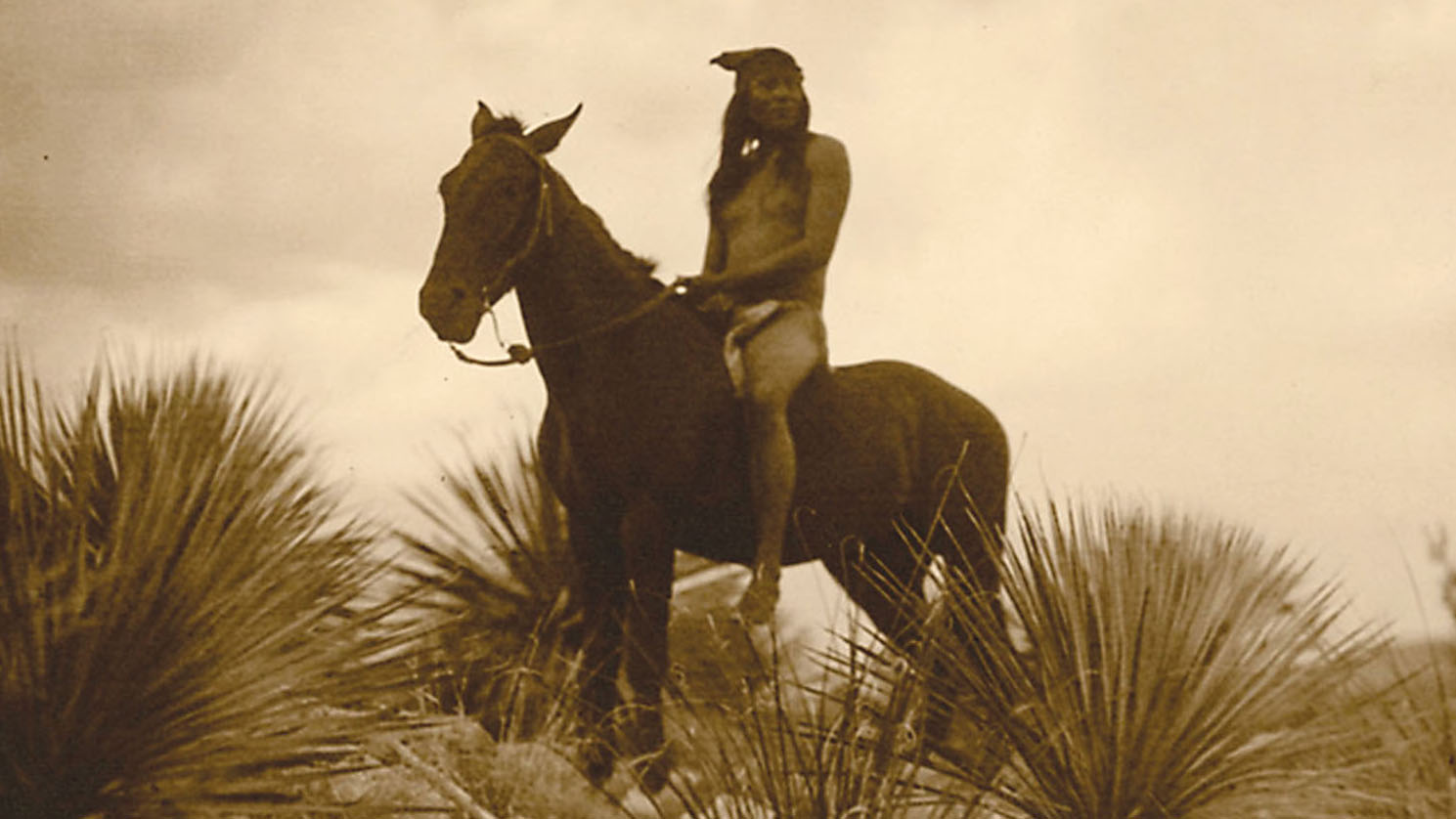
Based on the image itself, we have an indigenous man sitting on a horse in a desert-like environment. The horse stands among—what appear to be—yucca plants, with other various desert plants as well, and maybe some rocks near the horses front legs. It’s an overcast day, with signs of the clouds darkening (or clearing up; a glass half-full or half-empty scenario). The horse looks fit and sturdy, facing camera left, with its ears relaxed, slightly lifted, possibly listening to what’s behind it. The man’s body is facing forward, with his head turned toward his left shoulder (camera right); hard to say where his eyes are looking. He’s also fit and sturdy; shirtless; with a bandana-like cloth around his head, with what could be a feather sticking out the back (again, hard to say); he’s also wearing a light colored loincloth. The horse is wearing a bridle, with the man holding the reins.
Then, list five things you cannot know from looking at this image.
Again, based solely on the image, we do not know if the image is staged or candid; for all we know, this could be a businessman posing as a Native American; furthermore, I’ll add, we do not know if the man is indigenous/Native American or not. Without context, we don’t know the intention or purpose of this man on horseback: he could be on a leisurely ride or a scout surveying the countryside (as mentioned in the caption). We also don’t know where exactly this photo is, since there are no discernible landmarks. Lastly, we do not know what the photographer was trying to say or show.
What questions does the image leave you with?
I’m most curious about where this image was taken, who this man was, and what was the purpose/intention of the photograph. With that being said, the image is from an article that does present more information, and was taken by a well-known photographer, so the answers could be out there, but I went into this prompt blind, in an effort to provide thoughts based only on the photograph itself.
source: https://clacs.berkeley.edu/us-mexican-war-forgotten-foes
clacs.berkeley.edu
THE U.S. - MEXICAN WAR: Forgotten Foes
Unearthing the forgotten role played by Native Americans in the U.S.–Mexican War with historian Brian DeLay.