Test Your Knowledge
By examining the works of Abanindranath Tagore, Rabindranath Tagore and Amrita Sher-Gil, we’ve seen how the artists of the early 20th century had distinct visions for Indian art in the years preceding Independence. These threads would remain integral to developments in art in the decades to come. Before you move onto the next Lesson, take this quiz to make sure you remember everything you just learnt.
Quiz Summary
0 of 12 Questions completed
Questions:
Information
You have already completed the quiz before. Hence you can not start it again.
Quiz is loading…
You must sign in or sign up to start the quiz.
You must first complete the following:
Results
Results
0 of 12 Questions answered correctly
in .
Time has elapsed
You have reached 0 of 0 point(s), (0)
Earned Point(s): 0 of 0, (0)
0 Essay(s) Pending (Possible Point(s): 0)
Categories
- Not categorized 0%
- 1
- 2
- 3
- 4
- 5
- 6
- 7
- 8
- 9
- 10
- 11
- 12
- Unanswered
- Answered / Current
-
Question 1 of 12
1. Question
- The traditional model of studying art in India was typically centred on one-on-one learning, where students were apprentices to teachers, who were also their role models and guides.
CorrectIncorrect -
Question 2 of 12
2. Question
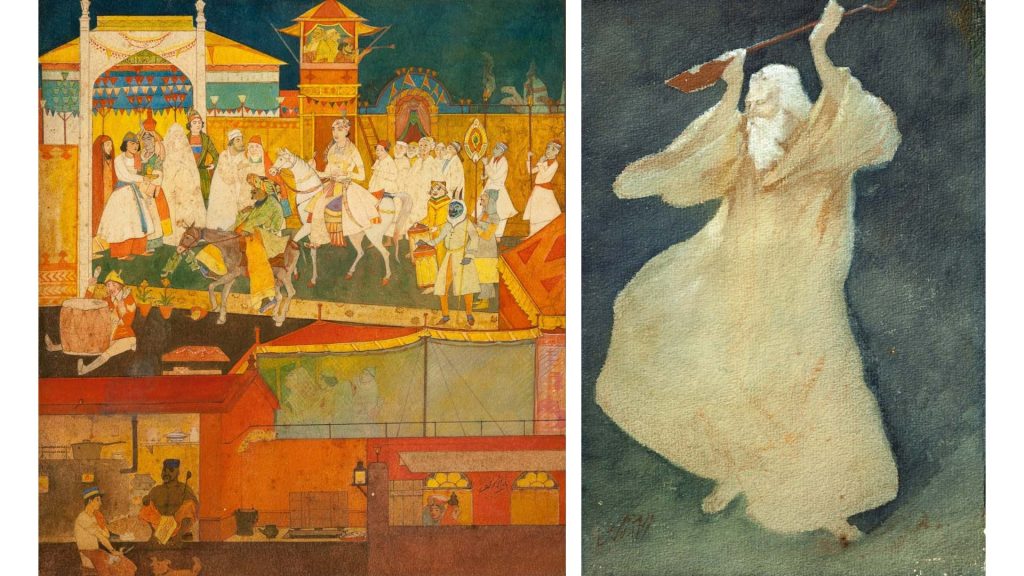
2. What are some of the key features of Abanindranath Tagore’s style that these paintings display? You may select more than one answer.
 CorrectIncorrect
 -
Question 3 of 12
3. Question
3. What is the name of Rabindranath Tagore’s pioneering school where his radical approach to art and education took shape?
CorrectIncorrect -
Question 4 of 12
4. Question
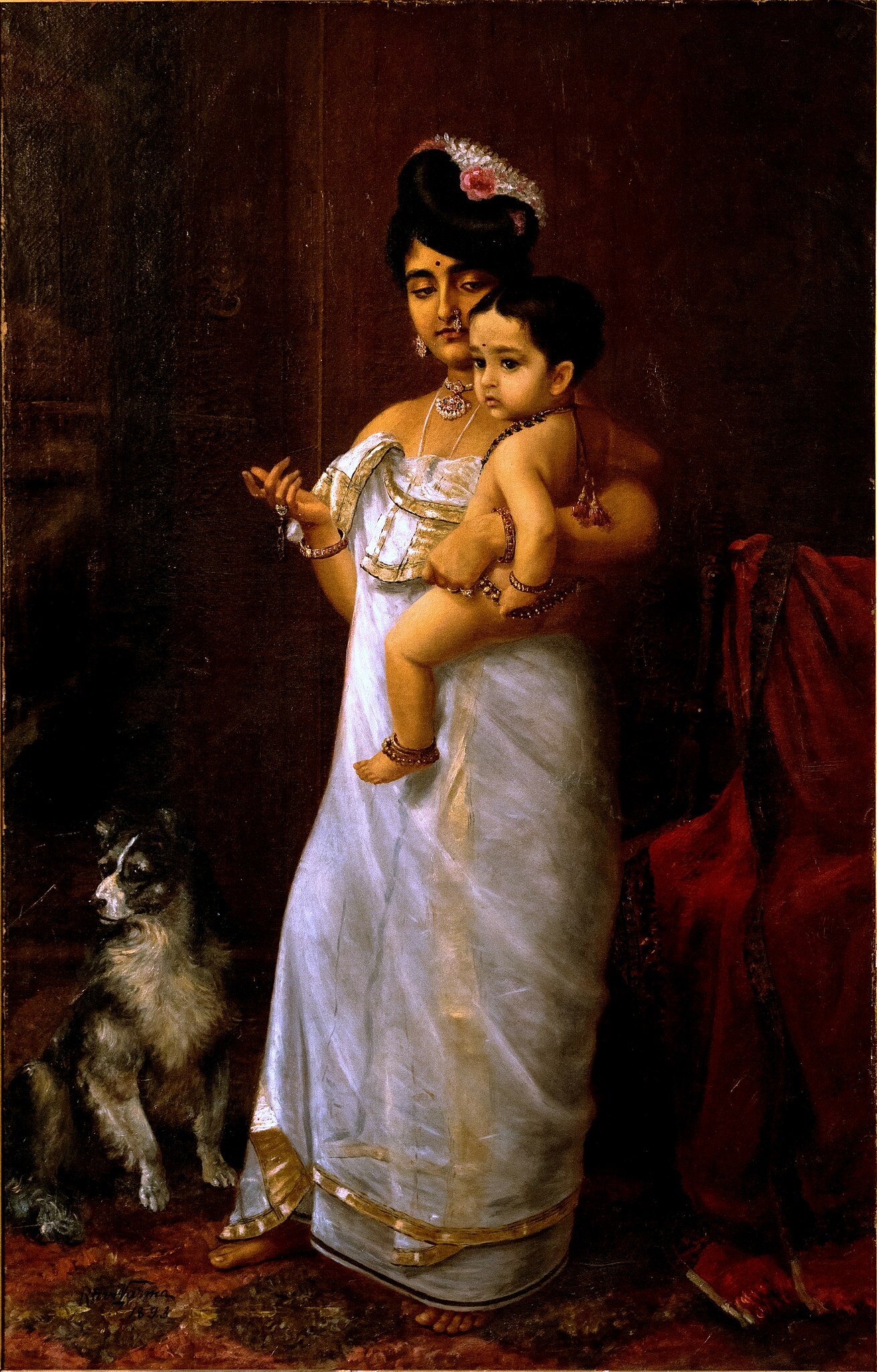
4. Drag and drop the name of the artist to the corresponding artwork.
- Raja Ravi Varma
- Amrita Sher-gil
- Abanindranath Tagore
CorrectIncorrect -
Question 5 of 12
5. Question
5. As a part of the Swadeshi movement, artists like Raja Ravi Varma borrowed greatly from European techniques.
CorrectIncorrect -
Question 6 of 12
6. Question
6. What are the ways in which Shantiniketan differed from other art schools of its time?
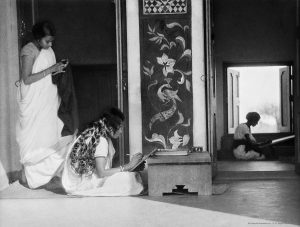
Art students at Santiniketan, India, 1929 CorrectIncorrect -
Question 7 of 12
7. Question
7. Which European school of art did the artistic and pedagogical structure of Shantiniketan parallel?
CorrectIncorrect -
Question 8 of 12
8. Question
- What are some of the ways in which Stella Kramrisch contributed to art historical scholarship in India? You may select more than one answer.
CorrectIncorrect -
Question 9 of 12
9. Question
9. Drag and drop the name of the artist to the statement that best describes their perspectives on the Indian nation-state and cultural identity.
- Abanindranath Tagore
- Amrita Sher-Gil
- Rabindranath Tagore
-
Boycotting British goods, as part of the freedom movement against colonialism
-
Searching for an Indian identity, and attempting to connect global influences with Indian heritage, community and personal memory
-
Advocating international and cross-cultural exchange
CorrectIncorrect -
Question 10 of 12
10. Question
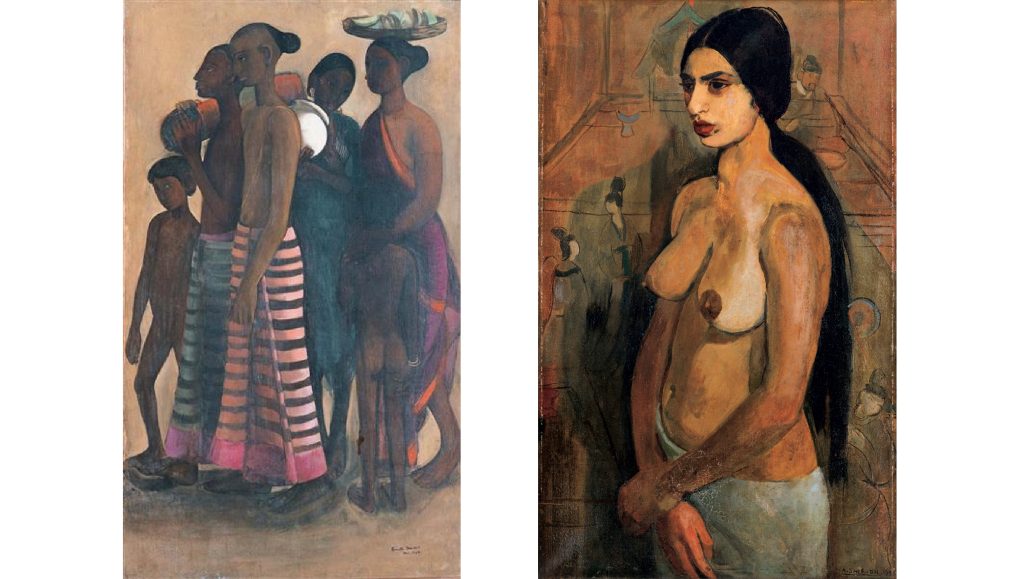
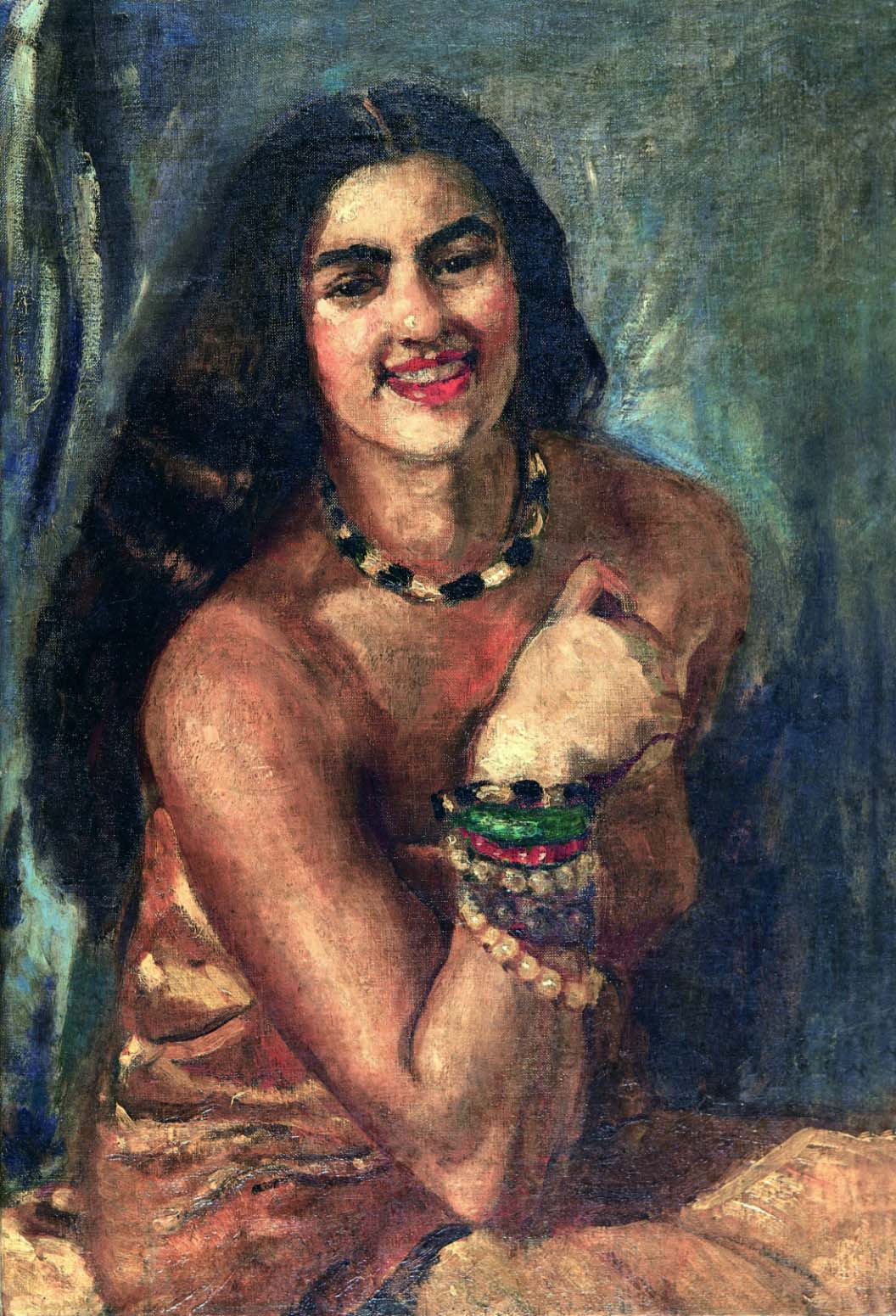
- What key aspects of Amrita Sher-Gil’s style of art do we see in these paintings?
 CorrectIncorrect
 -
Question 11 of 12
11. Question
11. The emergence of colonial art schools in India coincided with the shift in patronage from wealthy aristocrats and rulers to new collectors and patrons such as British officers.
CorrectIncorrect -
Question 12 of 12
12. Question
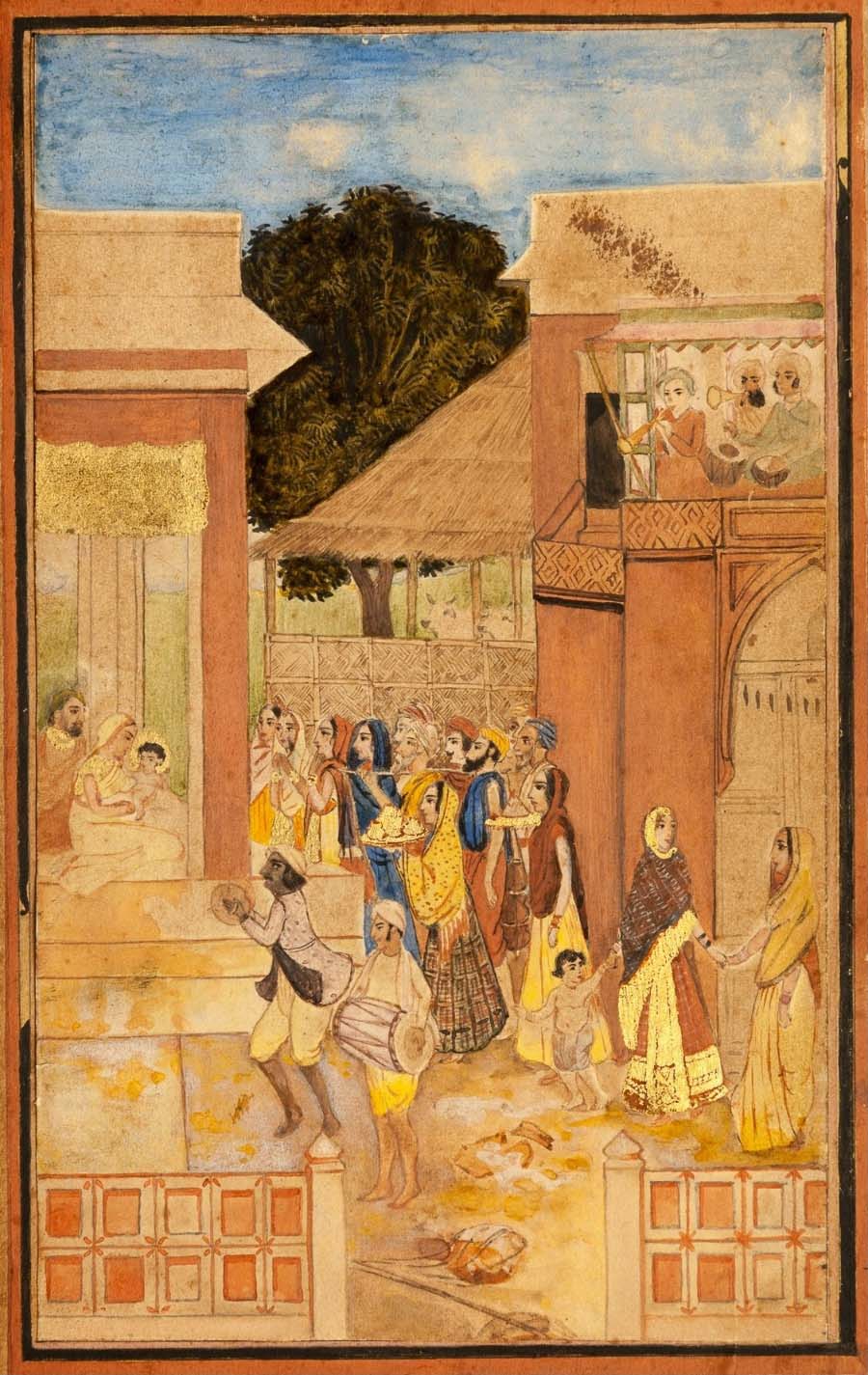
12. What were some of the major shifts in India’s artistic practices in the colonial period?
CorrectIncorrect
Report
There was a problem reporting this post.
Block Member?
Please confirm you want to block this member.
You will no longer be able to:
- Mention this member in posts
Please allow a few minutes for this process to complete.
Report
*If you previously registered for a course on MAP Academy (now Impart), please use the same credentials.
