Courses Landing › Forums › Discussion Forum: The Image Complex: Photography, Vision, and Belief in South Asia › Reflections › Reply To: Reflections

Session 4: Images in Community: How Photographs Travel
Trace one photograph across fi ve platforms. What do you notice about how each platform has presented the photograph? How does each platform make you read the image differently?
I traced a photograph titled “Group of Young Bhutias”, attributed to Fred Ahrle. I first came across this photograph on the website of DAG (formerly the Delhi Art Gallery), as part of its exhibition “Typecasting”. In the context of a professional website by a cultural institution, the historical background of the photograph can be given, which helps the viewer in beginning to understand how and why this photograph came to be. In the article about the exhibition from the newspaper “The Hindu”, the photograph appears again, presented as a small sample of the photographs that can be seen at the full exhibition. I feel that the article takes seriously the intentions of DAG in presenting part of its collection of ethnographic photographs, even though the viewer can’t access more information through an interactive link as on the DAG website. In this case, the photograph acts as an invitation to the viewer to learn more about this photograph and its history (including that of ethnographic photography), and also to learn more about the other photographs in the exhibition.
The same photograph appears on the image portal Alamy, accompanied by the text shown in the image at the link below: “This photograph captures a group of Khasi teenagers in 1865, showcasing the attire and cultural practices of the Khasi people in Meghalaya, India. It reflects the social and cultural aspects of the time.” The photo has Alamy watermarks over it, situating it in the “gallery” of an image licensing portal. It does not mention the context of the ethnographic album which in which it was compiled, its more recent history as part of the DAG exhibition, nor who the photograph was attributed to. It is simply an historical photograph which can be licensed for some purpose that the licensee has in mind. In a similar context to the article from “The Hindu”, the photograph also appears in an Instagram post on the DAG’s page, as part of a sample of photographs which promote the “Typecasting” exhibition. The photograph is accompanied by a brief explanation (necessitated by the nature of the platform) of the exhibition, thereby keeping it contact with its historical context to an extent. Other users may choose to circulate the image of the photograph without that context, which is not the fault of the DAG, but instead a possible side effect of a platform such as Instagram. Lastly, the fifth platform is the physical space of the DAG itself. While I did not see the exhibition in person, I would imagine that I would feel the metaphorical “weight” of the object, since I would be able to see its texture and colour. I feel that in this space, there is also an opportunity to contemplate more of the photograph’s agency: in what pattern I might move around the gallery space, how much time I spend in the area where it is displayed, how its placement “interacts” with the photographs around it, for example.
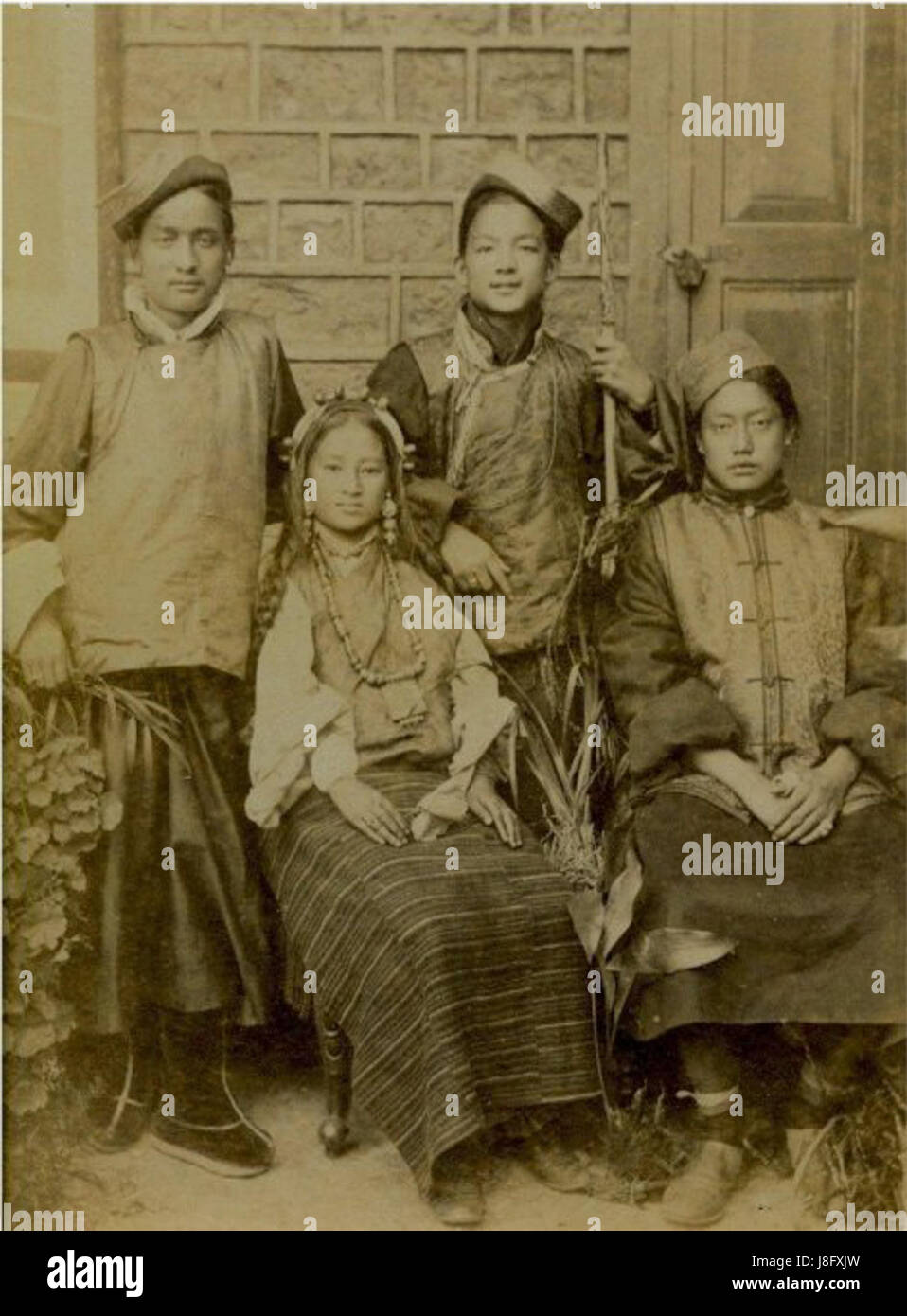
alamy.com
Download this stock image: This photograph captures a group of Khasi teenagers in 1865, showcasing the attire and cultural practices of the Khasi people in Meghalaya, India. It reflects the social and cultural aspects of the time. - J8FXJW from … Continue reading